
- YesTrades - Your Trusted Partner
- June 25, 2026
- Safety Guides
Landlord Safety Inspection: A Pragmatic ...
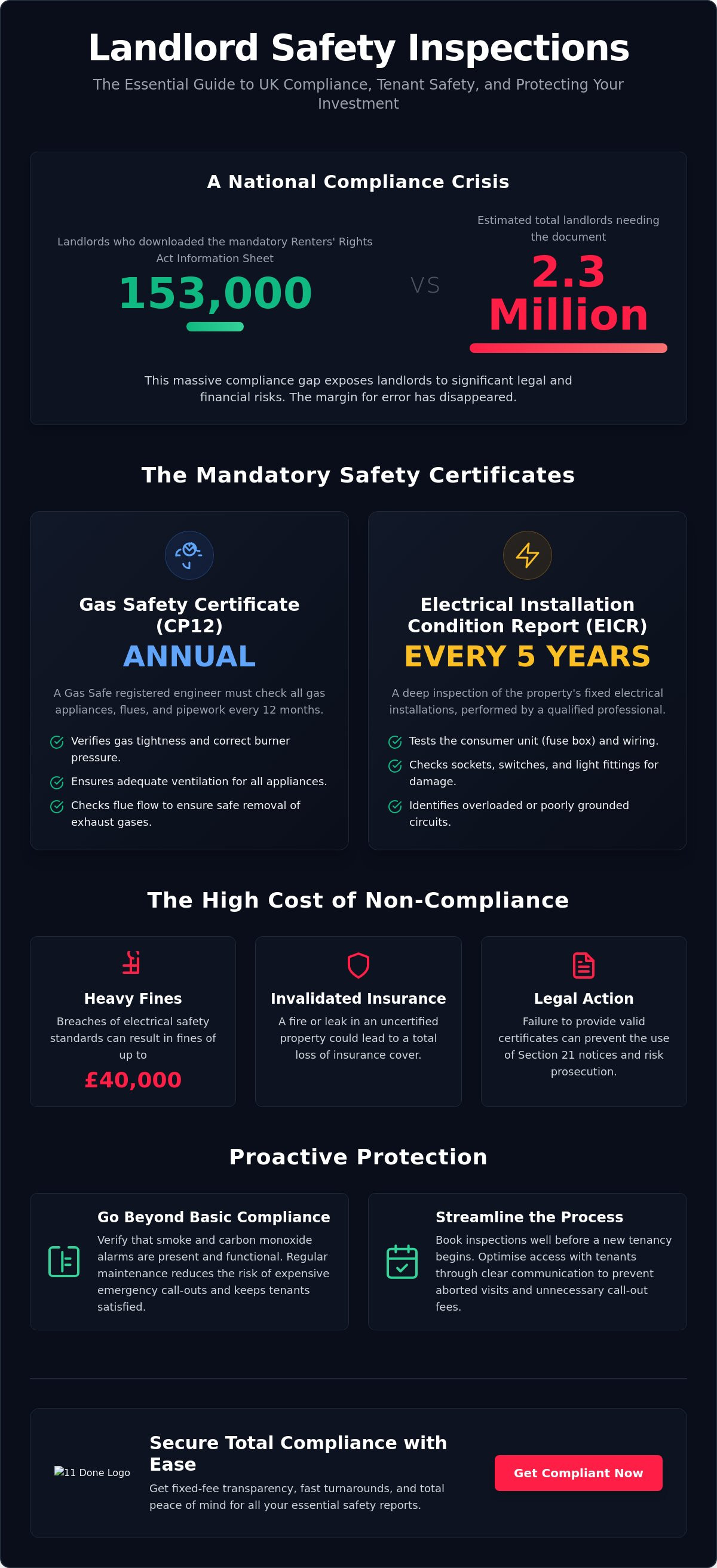
Only 153,000 landlords downloaded the mandatory Renters' Rights Act Information Sheet in the month following its May 2026 release, despite an estimated 2.3 million needing it. This massive compliance gap is a significant risk. Fines for electrical safety breaches now reach up to £40,000. The margin for error has disappeared. Booking a landlord safety inspection shouldn't feel like a legal minefield. You need clarity, speed, and reliable results. We provide the tools to protect your investment and your tenants.
We know that shifting regulations and hidden costs cause constant stress. It's difficult to coordinate access with tenants whilst keeping track of expiring certificates. This guide promises a masterclass in your legal obligations. We provide an efficient breakdown of mandatory inspections and professional safety standards. You'll learn how to secure total legal compliance with fixed-fee transparency and fast turnaround times. From the annual Gas Safety Certificate to the five-year EICR cycle, we've organised the facts. Get compliant. Stay protected. Move forward.
Key Takeaways
- Understand the full scope of a landlord safety inspection. Ensure your property meets current UK health and safety standards.
- Identify mandatory gas and electrical certificates. Use registered professionals to guarantee legal validity and avoid heavy fines.
- Go beyond basic compliance. Regular maintenance reduces the risk of emergency call-outs and keeps tenants satisfied.
- Optimise access and preparation. Prevent aborted visits and avoid unnecessary call-out fees through better communication.
- Simplify the process with transparent, fixed-fee services. Secure fast turnarounds for all essential safety reports without hidden costs.
What is a Landlord Safety Inspection?
A landlord safety inspection is a professional assessment of a rental property’s essential services and installations. It is a comprehensive check. It ensures every part of the property meets the latest UK health and safety standards. This process isn't just about ticking boxes. It is about verification. Qualified engineers examine gas appliances, electrical circuits, and fire detection systems to ensure they function safely. This protects you. It protects your investment. It provides tenants with documented proof that their home is safe to inhabit. Without these reports, you are exposed. You face heavy fines. You risk potential criminal prosecution if things go wrong.
A professional inspection typically covers three core areas:
- Gas Safety: Checking all gas appliances, flues, and pipework for leaks or faults.
- Electrical Safety: Testing the fixed wiring and permanent installations for wear or damage.
- Fire Safety: Verifying that smoke and carbon monoxide alarms are present and functional.
The Legal Shield: Why Inspections Matter
Compliance is a statutory requirement for all UK tenancies. It is your legal shield. Valid certificates are often a prerequisite for landlord insurance policies. If you don't have them, your insurance might be worthless. A fire or gas leak in an uncertified property could lead to a total loss of cover. The financial stakes are high. Under current regulations, the rules are strict. You must provide a valid Landlord's gas safety certificate to your tenants at the start of every tenancy. Failure to provide these documents can prevent the use of Section 21 notices and other possession grounds. It can also lead to fines of up to £40,000 for electrical safety breaches. It's a high price for a simple oversight.
Frequency and Timing
Different installations require different inspection intervals. You must stay on top of these dates. Gas safety checks are an annual obligation. You need a new certificate every 12 months. Electrical Installation Condition Reports (EICR) are usually required every five years. However, you should never wait until the last minute. Best practice is to book your landlord safety inspection well before a new tenancy begins. This ensures the property is ready. It prevents delays. It stops you from having to coordinate access with a new tenant during their first week. Efficiency is key. Booking early allows you to fix any issues without the pressure of an expiring deadline. Stay proactive. Stay compliant.
The Core Components: Gas and Electrical Safety
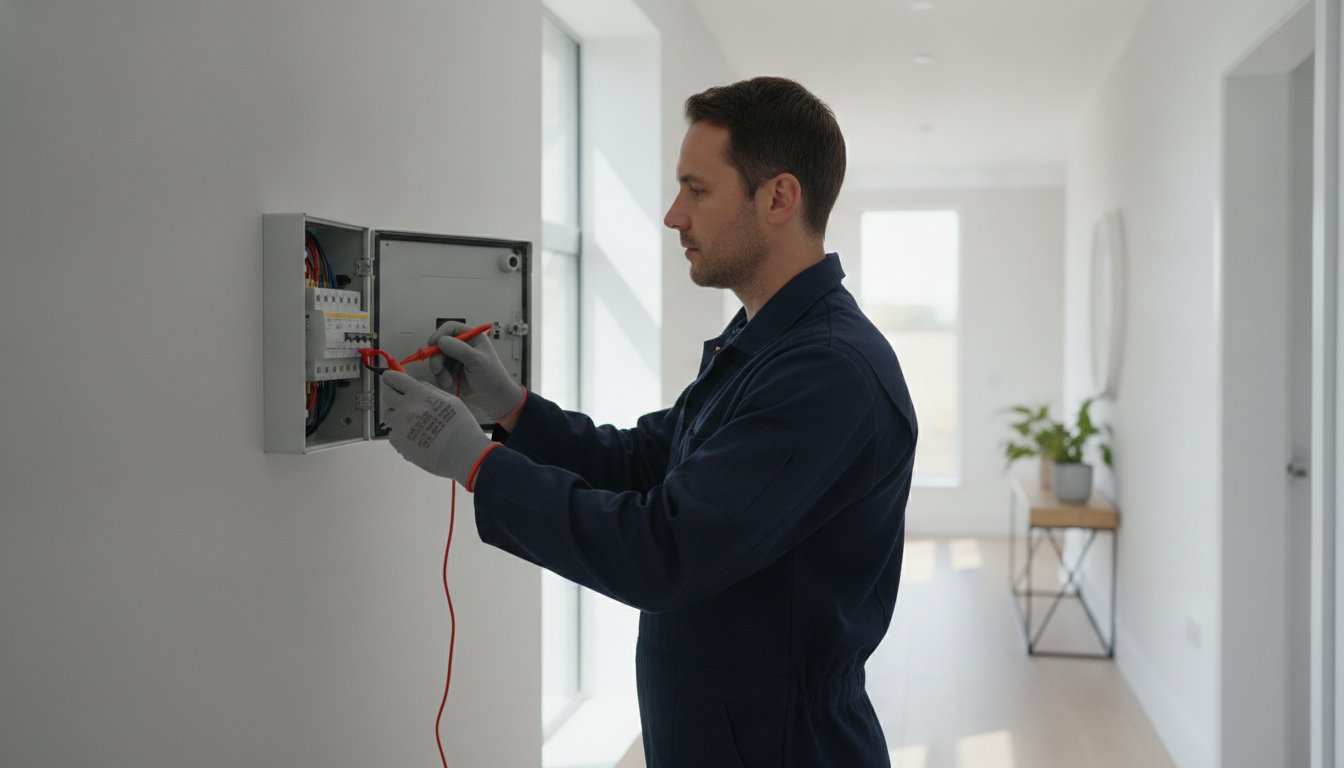
Gas and electricity are the non-negotiables of property management. They form the foundation of every professional landlord safety inspection. You cannot skip these checks. You cannot perform them yourself. Only registered, qualified professionals can legally sign off these reports. These inspections ensure your property isn't just functional, but safe for human habitation. They identify faults before they become emergencies. They provide the paper trail required by local authorities and insurers alike.
When an engineer visits, they don't just look for obvious problems. They use calibrated equipment to find hidden risks. Results are recorded in formal documents. These reports use specific codes to highlight the severity of any issues found. "Immediately Dangerous" (ID) means the installation is a life-safety risk and must be disconnected. "At Risk" (AR) means a fault exists that could become dangerous. You need these results instantly to take action. Speed saves lives. Speed also saves your reputation.
Gas Safety (CP12) Requirements
The Gas Safety Certificate, commonly known as a CP12, is an annual obligation. It covers every gas appliance, flue, and pipework installation you provide as a landlord. If the tenant brings their own gas heater, you aren't responsible for the appliance itself, but you are still responsible for the pipework feeding it. A Gas Safe registered engineer must perform this check every 12 months. They verify gas tightness. They check burner pressure and ensure there is adequate ventilation. They also test flue flow to make sure exhaust gases are leaving the building safely. Don't wait for the expiry date. You can carry out the check up to two months before the current certificate expires whilst keeping the original renewal date.
Electrical Installation Condition Report (EICR)
An EICR is a deep dive into the property’s "fixed" electrical parts. It focuses on the consumer unit, the wiring inside the walls, and the sockets. This isn't a quick visual check. It is a rigorous series of tests designed to find circuits that are overloaded or poorly grounded. Current Electrical safety standards make this mandatory every five years for all private rental properties in the UK. If the report comes back with a C1 or C2 code, the installation is "unsatisfactory." You must carry out remedial work within 28 days or sooner if specified. If you want to book your mandatory certificates without the stress of hidden costs, choosing a provider with fixed-fee transparency is the most pragmatic move. It keeps your landlord safety inspection simple and your budget predictable.
Beyond the Basics: Recommended Maintenance Inspections
A landlord safety inspection provides the legal minimum. It keeps you out of court. But it doesn't guarantee a smooth-running property. True efficiency requires a proactive stance. You shouldn't just wait for a mandatory check to discover a failing system. Regular maintenance reduces the risk of emergency call-outs. It eliminates the stress of tenant complaints during a freezing winter. A property that works well is a property that stays profitable. This isn't just about safety. It's about strategic asset management.
Proactive care extends the lifespan of your most expensive installations. Replacing a boiler or a consumer unit is a major capital expense. Maintaining them is a minor operational one. It's simple arithmetic. By demonstrating a high standard of care, you attract higher-quality, long-term tenants. These tenants value reliability. They stay longer. They treat the property with more respect. You reduce void periods. You increase your return on investment. Efficiency pays for itself.
- Reduced Liability: Documented maintenance proves you take your duty of care seriously.
- Cost Control: Fixing a small leak today prevents a ceiling collapse tomorrow.
- Tenant Retention: Functional homes lead to fewer disputes and better relationships.
Annual Boiler Servicing
The annual gas check is for safety. A boiler service is for performance. They are not the same thing. Whilst the law focuses on Gas safety for landlords, a service ensures your unit operates at peak efficiency. It lowers energy bills for your tenants. It prevents the build-up of sludge and debris in the system. If you have a newer unit, an annual service is usually essential for maintaining the manufacturer's warranty. Without it, a breakdown could cost thousands. With it, you have peace of mind. It's a small investment to protect a critical asset.
Legionella Risk Assessments
Health and safety isn't just about gas and sparks. Water matters too. You have a legal duty to assess the risk of Legionella in your rental property's water systems. This is frequently overlooked during a standard landlord safety inspection, but it remains a critical part of compliance. You don't always need a complex laboratory test. For most domestic properties, a simple assessment suffices. Check the water temperature. Ensure tanks are clean and have tight-fitting lids. Flush the system if the property has been vacant. These small steps protect your tenants from serious illness and protect you from liability. It's straightforward. It's necessary.
Streamlining the Process: Preparation and Access
Logistics often cause more delays than the actual technical inspection. It's rarely the boiler or the wiring that causes the problem; it's the lack of access. An aborted visit is a drain on your time. It often leads to additional call-out fees that could have been avoided. Clear communication is the key to a frictionless experience. Preparation is the difference between a one-hour visit and a full-day headache. You need a process that works without constant oversight. You need a "get it done" mindset.
When you prepare properly, you eliminate the friction that slows down engineers. They can get in, perform the landlord safety inspection, and get out. This keeps your tenants happy. It keeps your schedule clear. It ensures your certificates are issued without unnecessary back-and-forth. Efficiency isn't just about speed. It's about removing every possible hurdle before the engineer even knocks on the door.
Organising Tenant Access
You must provide tenants with the statutory minimum 24 hours’ notice in writing. This is your legal baseline under the Renters' Rights Act 2025. However, a pragmatic landlord goes further. Explain the benefits clearly. Tell them the inspection ensures their home is safe, reliable, and compliant. When tenants see the value, they are less likely to be difficult. Request specifically that they move furniture or clutter away from meters and consumer units in advance. Engineers are there to test, not to move sofas. If the engineer cannot reach the installation, the job stops. This results in a fail and a wasted fee.
The Landlord’s Preparation Checklist
Don't leave everything to the tenant. You have a role to play in the process. Ensure all gas appliances are accessible. Check that cupboards housing the boiler or meters aren't packed with storage. If the property uses pre-payment meters, confirm there is enough credit for testing. An engineer cannot verify a boiler's safety without gas. They cannot test circuits without power. Locate previous safety records before the visit. Having the property history ready helps the engineer work faster. It identifies recurring issues early. It makes the entire visit more efficient.
- Confirm clear access to the boiler, gas meter, and consumer unit.
- Check for sufficient credit on all pre-payment meters for gas and electric.
- Provide all keys for locked utility rooms or external meter boxes.
- Have previous certificates and maintenance logs available for the engineer.
- Brief tenants on the duration and purpose of the visit to ensure cooperation.
Efficiency is about removing friction. It's about transparency. If you want a service that values your time as much as you do, book your professional safety checks today. Get it done right the first time. No hidden extras. No wasted visits. Just compliance made simple.
Efficient Compliance with 11 Done
11 Done simplifies property maintenance. We use a "get it done" philosophy. It eliminates the friction of traditional booking. You don't need complex jargon. You need valid certificates. We provide them. Our fixed-fee inspections remove the anxiety of hidden costs. No "extras" on the day. Just clear, upfront pricing for your landlord safety inspection. We understand the pressure of the 2026 regulatory landscape. We've built a service that handles the complexity for you.
Busy landlords value their time. We value it too. Our engineers are vetted professionals. They understand the urgency of rental compliance. They know that a missed deadline can lead to the heavy fines discussed earlier. We've handled the vetting. We've handled the pricing. You just book and move on. It's a modern approach to a traditional problem. We act as your tech-savvy facilitator. We bring order to your property management tasks.
The 11 Done Advantage
We offer national coverage with a local feel. It is professionalism at scale. You get one platform for everything. Gas Safety Certificates. EICR reports. Boiler services. Even oven cleaning or blocked drain clearance. It is a single point of contact for your entire portfolio. No more managing multiple tradespeople. No more chasing unreliable contractors. We provide the stability you need. Our reports are clear. Our results are verified. We avoid dense technical jargon. We use plain English because clarity is efficiency.
The 11 Done platform is designed for speed. The booking process is streamlined. It is highly logical. It moves you from a service need to a solution in seconds. This creates a frictionless experience. It matches the behaviour of a landlord who needs immediate results. We vet every professional on our platform. Quality control is built-in. You don't have to worry about the reliability of the person entering your property. We've already done that work.
Ready to Tick it Off Your List?
Compliance shouldn't be a burden. It is a logistical task. Delegate the detail to us. We ensure fast turnaround for CP12 and EICR reports. Our results are reliable. They are robust. You stay legal. Your tenants stay safe. The process is transparent. It is done. Don't let the threat of a £40,000 fine for electrical breaches slow you down. Take a proactive step today. Secure your property. Protect your investment.
Book your landlord safety inspection with 11 Done today.
Secure Your Compliance Strategy
The UK rental sector is entering a new era of strict regulation. You've seen the data. The risks of non-compliance are too high to ignore. Maintaining a valid landlord safety inspection schedule is the only way to protect your investment and stay on the right side of the law. It is about more than just avoiding fines. It is about professional standards and tenant safety.
Focusing on mandatory gas and electrical checks ensures you meet your statutory obligations. Streamlining your access logistics saves you from wasted time and unexpected fees. You need a partner that values efficiency as much as you do. 11 Done removes the friction from property maintenance. We offer fixed-fee Gas Safety Certificates and expert EICR inspections through our national network of vetted engineers. Our process is transparent, fast, and reliable.
Secure your property with a professional inspection today. Delegate the technical details to our experts and focus on growing your portfolio. Compliance is simple when you have the right team behind you. Get it sorted now.
Frequently Asked Questions
Is a landlord safety inspection a legal requirement in the UK?
Yes. It is a mandatory statutory requirement. You must ensure all gas and electrical installations are safe. Failure to comply can lead to fines of up to £30,000 for general breaches and £40,000 for electrical safety failures. It's your legal duty to provide a safe home for your tenants. Valid certificates are non-negotiable for any legal tenancy.
How often do I need a gas safety inspection for my rental property?
You need a check every 12 months. This is a strict annual obligation. You can arrange the inspection up to two months before the current certificate expires whilst keeping the original renewal date. This "stay date" provision helps you stay organised. Never let your gas safety cover lapse. It's a critical safety and legal risk.
What happens if my property fails its electrical safety inspection?
You must carry out remedial work within 28 days. If the report identifies C1 or C2 faults, the installation is unsatisfactory. C1 issues require immediate action to make the property safe. Once repairs are finished, you must get written confirmation. You then provide this to your tenant and the local authority. Speed is vital for continued compliance.
Can a tenant refuse entry for a mandatory safety check?
Tenants can refuse entry, but you have a right to access with proper notice. You must provide at least 24 hours’ notice in writing. If they still refuse, don't force entry. Document every attempt you make to book the landlord safety inspection. This evidence is your protection. It shows the local authority you've taken all reasonable steps to comply.
How long does a full landlord safety inspection usually take?
Timeframes vary by service. A standard gas safety check usually takes 30 to 60 minutes. An EICR is more comprehensive and typically lasts between two and four hours. The property size and the number of electrical circuits determine the exact duration. Ensuring the engineer has clear access to the boiler and consumer unit will prevent unnecessary delays.
Do I need a new inspection if I am switching to a new tenant?
Not if your current certificates are still valid. You don't need a new landlord safety inspection for every change of occupancy. However, many professional landlords prefer a fresh check before a new move-in. It identifies any damage caused by previous tenants. It ensures the property is in peak condition. It starts the new relationship with total transparency.
What is the difference between an EICR and a PAT test?
An EICR covers the fixed wiring, fuse box, and sockets. It is a mandatory five-yearly legal requirement. Portable Appliance Testing (PAT) checks movable items like kettles, toasters, or lamps provided by the landlord. PAT is not a standalone statutory requirement in the same way as an EICR. However, it is highly recommended to ensure all provided equipment is safe.
Who is responsible for unblocking drains-the landlord or the tenant?
Responsibility depends on the cause. Landlords are responsible for structural faults, tree root ingress, or fair wear and tear. Tenants are usually liable if the blockage is caused by misuse. This includes flushing wet wipes or pouring fat down the sink. Clear tenancy agreements help resolve these issues. Our blocked drain clearance service provides a fast, pragmatic solution for either scenario.
Comments